PERSPECTIVE: Filip Kubica on Wingsuits and Mindset
Shop Now

Anomaly Polartec® Fleece Anorak
$125.00

Salad Days Polartec® Fleece Shirt
$60.00
Popular Stories

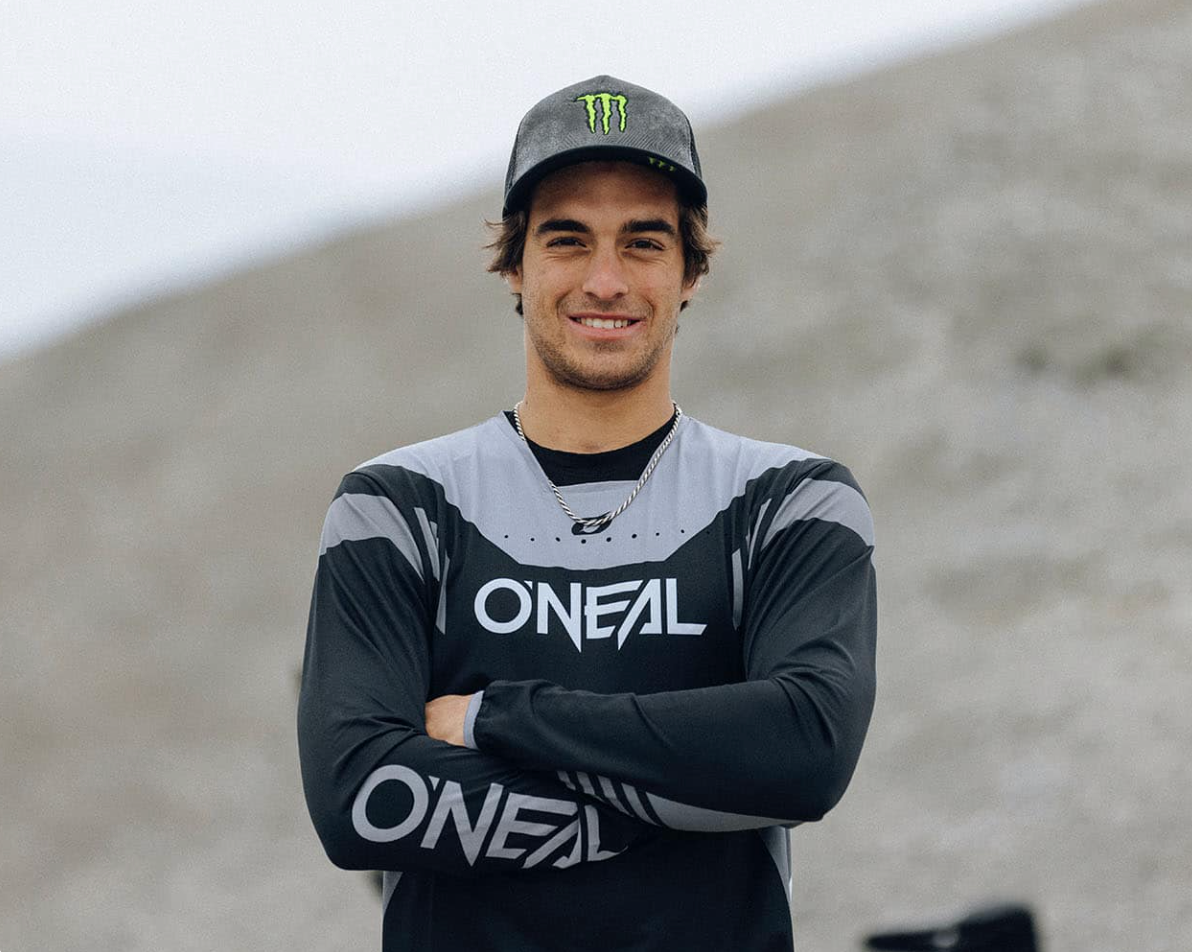
I met Filip Kubica on a bus in Lauterbrunnen, Switzerland in January 2023. We were leaving the ski resort after a full day of speedflying, and by pure coincidence ended up riding the same shuttle back down the valley. I didn’t know who he was at the time, but we talked a bit, I followed him on Instagram, and that was that.
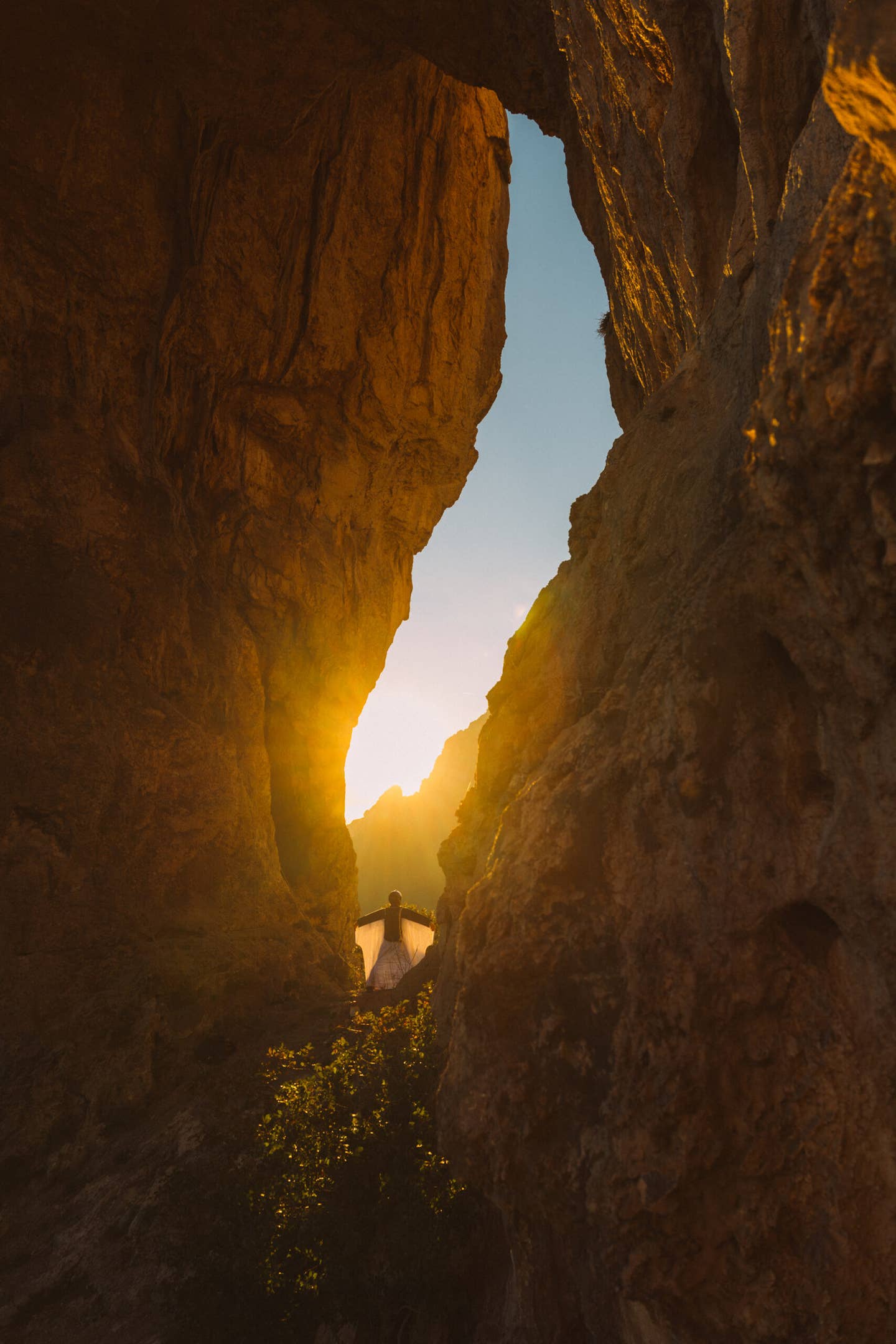
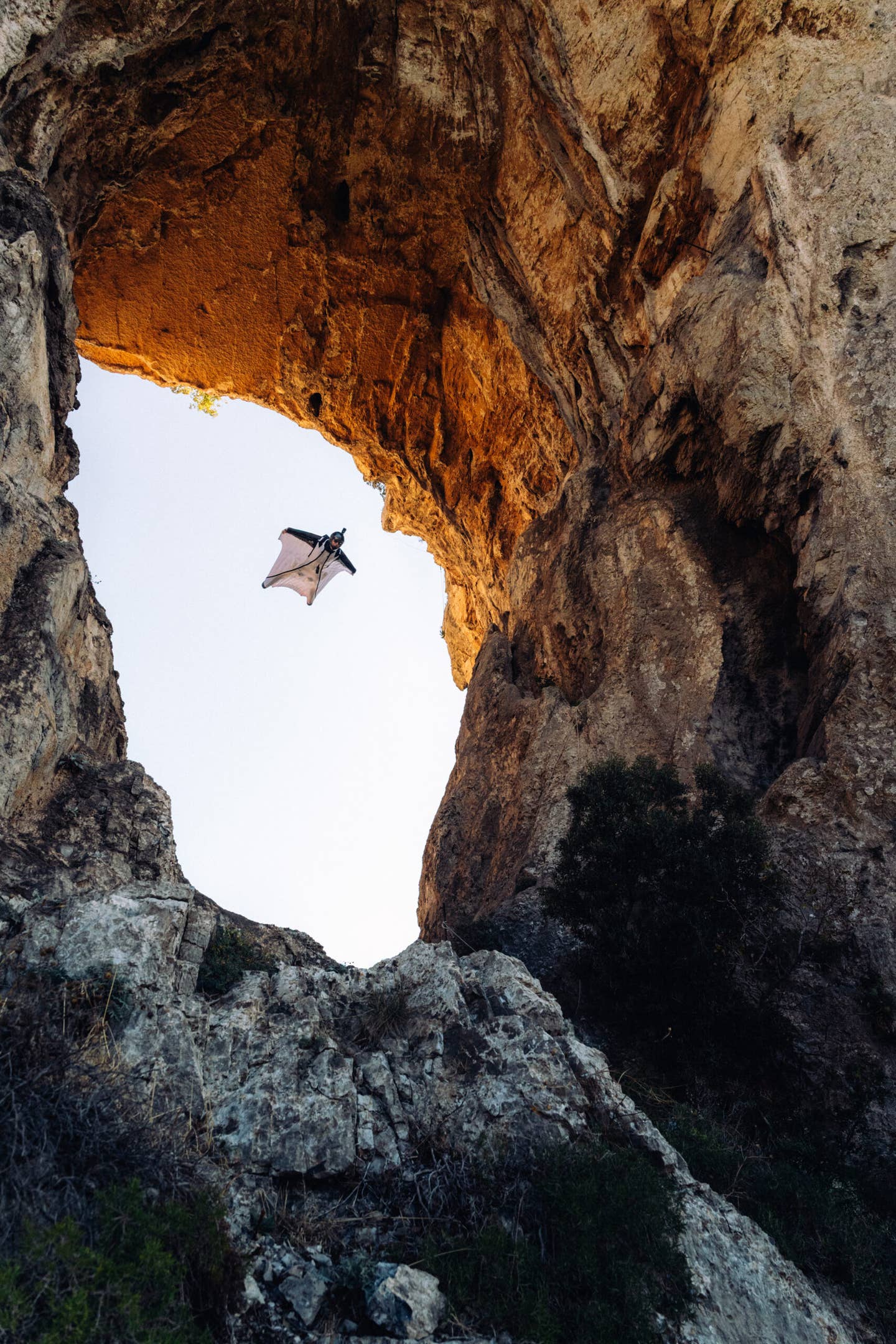
Over the months that followed, my feed slowly filled with some of the most absurdly technical wingsuit flights I’d ever seen; threading natural rock holes, diving through narrow cracks, flying lines that barely seemed real. And recently, he pulled off one of his most mental flights yet: a precision line through the “Eye of Positano”, a natural rock window above the Amalfi Coast that demands near-perfect glide and timing.
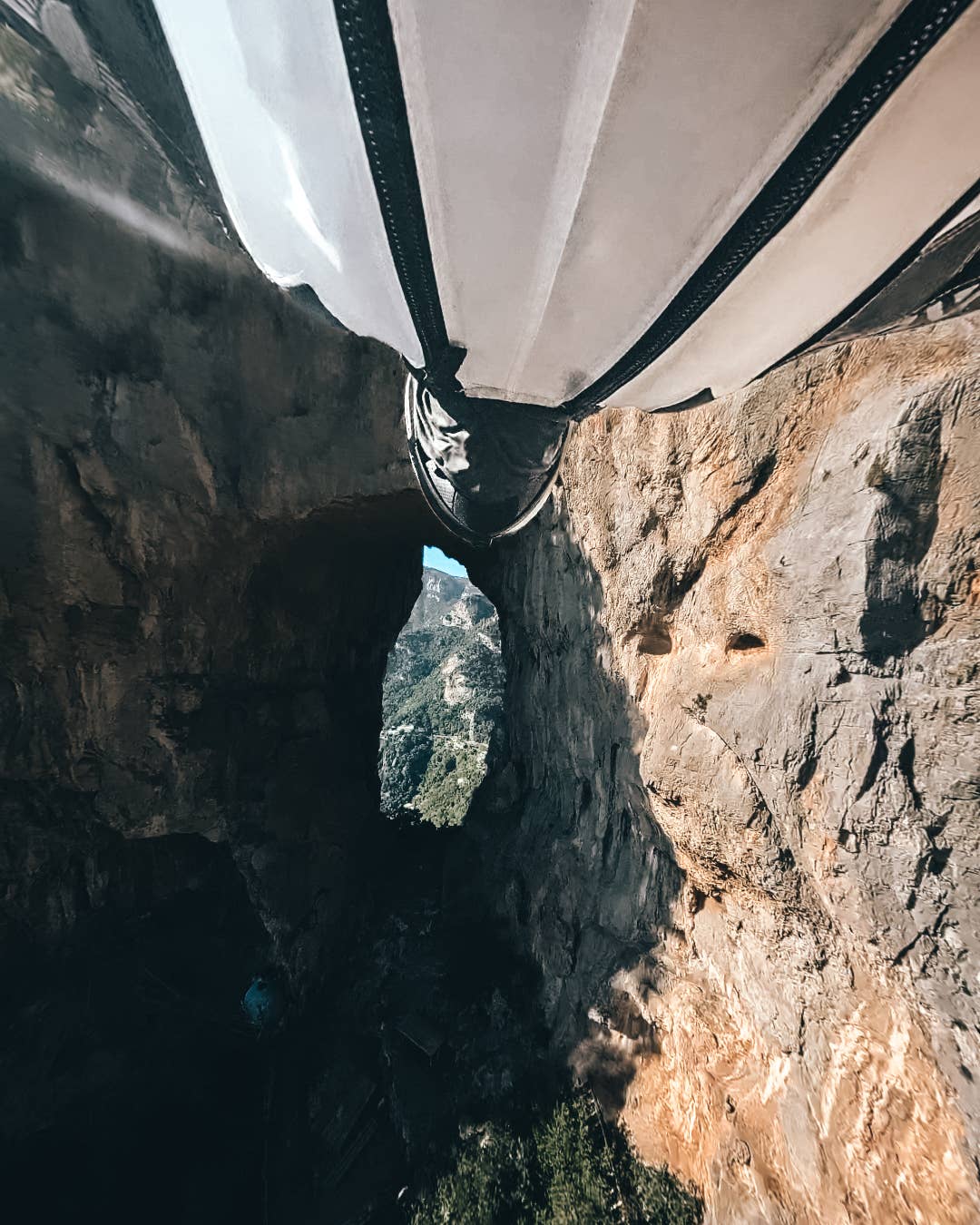
Eventually I reached back out because I wanted to understand how someone develops that level of precision in such an unforgiving sport, and what kind of mindset it takes to perform at that edge of human capability. Filip’s methods, approach, and philosophy toward flying are meticulous, fascinating, and clearly effective.
The following interview is not a quick read; but it’s absolutely worth sitting with the whole thing. For action sports athletes, there’s a ton here about mindset, risk management, flow state, and longevity in high-consequence environments. And for anyone outside the sport, there’s a deeper philosophical message woven through Filip’s answers; about calmness, patience, self-awareness, and what it means to commit to something fully.
Enjoy :)
What’s up Filip? Tell us a bit about yourself and what you’re chasing within wingsuiting.
Hi everyone! Thank you so much for having me. I’m a huge fan of TGR. I’m a Polish wingsuit pilot with around 10 years of experience, and for over four years now I’ve been living in the heart of the Swiss Alps, trying to combine creativity with flying skills.
Let’s talk about your latest stunt, the Eye of Positano project, flying through the Montpertuso hole in Italy. How did you find the Eye of Positano and how quickly did it change from a dream into an actual objective?
The idea was born two years ago, at a moment when I was a bit tired of the wingsuit world. It was a time when my best jumping partner had an accident. I came to the Amalfi Coast to relax and return to my roots, opening new wingsuit lines and reconnecting with the mountains. On the last day of the trip, I found this beautiful hole. I did all measurements and baseline calculations.
At that time, I only had time for one tryout. After that test flight, a similar line but on the left side of the Monte Gambera massif, I already knew it would be possible, but… I definitely needed more skills. I sketched it in my notebook and saved it for the future.

Every month since then, I wanted to come back and try again. After two years from our first “meeting,” I finally had the opportunity to return to the Amalfi Coast. It was the perfect moment, because we had evaluated the conditions at the turn of November and December as the best possible window for this project.
Was there anything that made this feature uniquely challenging compared to other holes you’ve flown through?
In my other fly-through-hole challenges, I had significantly more altitude or a shorter horizontal distance between the exit/drop point and the flyby spot. Here, the only possible place to start from was Monte Catello, a mountain located roughly 2 km away from the hole, with around 800 m vertical difference. This required an average glide ratio around 2.9 (if we assume an exit cross point of 200/200) right at the edge of my technical abilities.
And with such precision flights, you obviously don’t want to have that kind of glide ratio when entering the rock tunnel.
So the first part of the flight had to be flown at around a 3.3–3.4 glide, allowing me to convert that altitude into higher, safer speed during the pass through the hole.
And there was also a logistical problem…
We had to deal with a steel wire hanging exactly in the middle of the approach. It was an old leftover wire from a former installation. During the planning phase, we tried contacting several entities to remove it, but without success. We finally managed to remove it ourselves on-site, just the day before the project.
Talk us through the scouting process. How much time did you spend studying wind, terrain, and approach lines before you felt confident committing to the gap?
The trip was planned for only five days. After two days, we already knew it would work. But that short timeframe was only possible because we came fully prepared. I had flown a similar line several times in other locations as training, and a few days before the trip we confirmed the short-term weather window. We were also there during the time of year we had identified as optimal for the project. A few previous projects had also helped me adapt quickly to the visual of this one.

What was going through your head the moment you left the exit?
I aim for a state of mind that combines calmness with trust in my skills. These two things transform into deep focus.
I’ve trained my mind not to overcompensate emotionally. I also try not to “talk over” my fear. I’m usually quiet and composed, and I keep communication to a minimum.
Metaphorically speaking, I try to leave a bit of space in my mind for things I haven’t anticipated. If my brain is operating at 100% just to process what’s happening, that’s a sign the challenge is too big for me at that moment.
My small project team knows me well by now. They know I’m very talkative during the planning and brainstorming phase, but on the project day I communicate only with the simplest phrases. At first it felt strange to them, but now they know it’s normal and we even joke about it.
I also have a few methods I came up with myself (no idea if they’re “correct” methods) for identifying stress factors and once I understand them, I allow my mind to ignore them. For example, changing local wind conditions won’t stress you out if you understand why the wind is shifting at that exact moment.
Meteorological knowledge allows you to eliminate that stressor. And you do the same with every other factor, one by one, until you reach an inner sense of calm.
Wingsuiting at your level requires extreme precision, discipline, and confidence. What does training actually look like for you? Physically, mentally, and technically?
I’m a huge fan of training methodology, and although I’m not a professional in that field, I love using different training techniques.
Three years ago, I changed my training structure to a 30/70 split. Meaning 30% of my training time goes into mental work (visualization, finding the flow, or using some sport psychology techniques), as well as reaction, perception, and peripheral vision training. The remaining 70% is physical training, either strengthening my body in a general sense or simply spending time in the air.
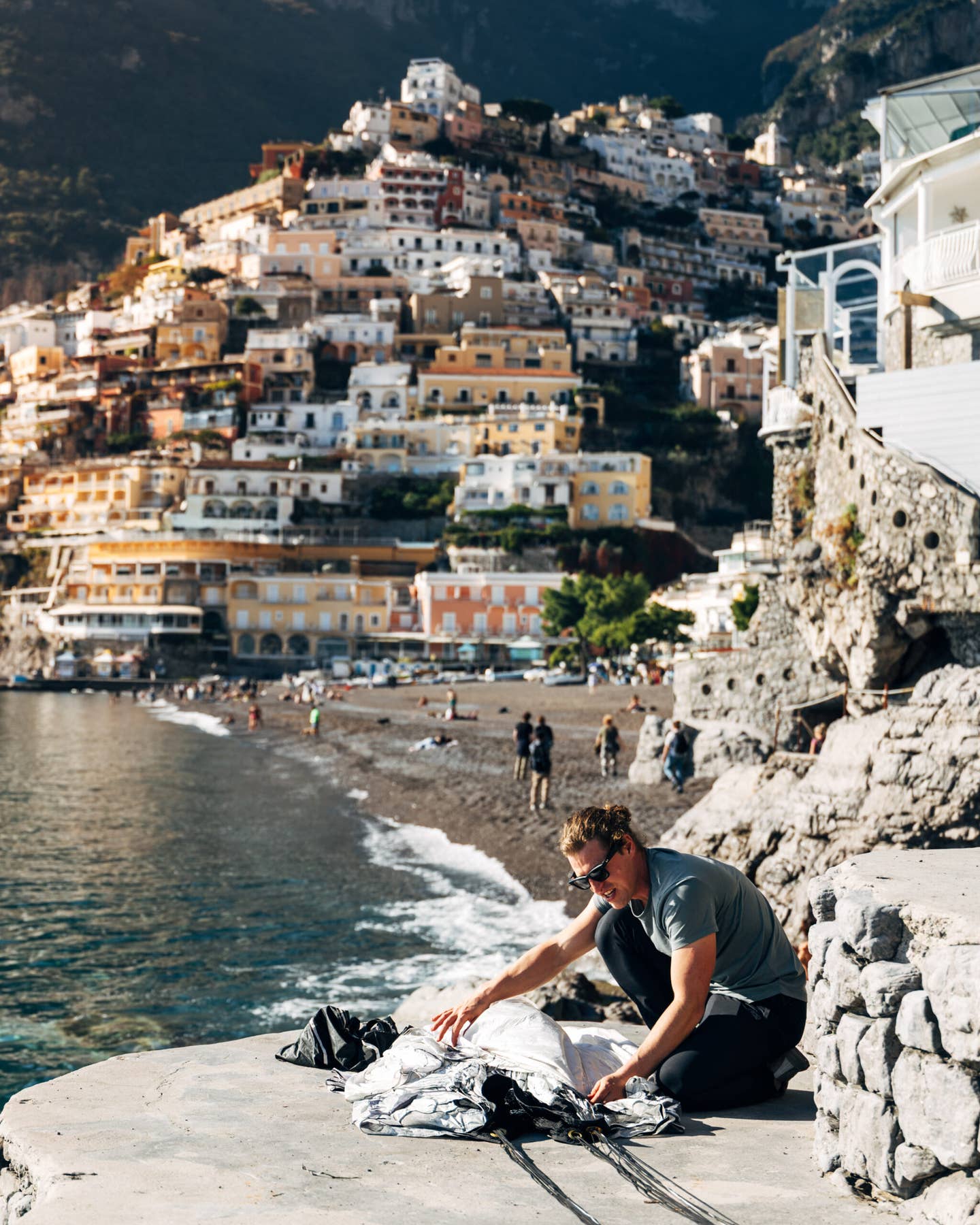
A lot of people consider you one of the best wingsuit pilots in the world right now. How do you carry that expectation, internally or externally, when you’re preparing for something this unforgiving?
That’s a strong statement and I’m not sure I can fully agree with it. I think we have a lot of very skilled wingsuit pilots, and many many of them are definitely better than me. For me, the true icons of this sport are the people who have been actively flying wingsuit BASE for 15–20 years or more.
As for pressure in a broader sense, setting goals and dreams that match my current abilities, and accepting that those abilities fluctuate and change over time (unfortunately, not always upward), helps me avoid frustration that comes from taking on something too big.
And external pressure? If my flights inspire someone, that’s wonderful but I’m also aware that I don’t have to meet anyone’s expectations. That doesn’t mean I never feel pressure, when I do, I simply put the project on the shelf and come back to it later with a clear head.
When it comes to the project preparation phase, I always assume there will be multiple attempts and I prepare plan A, B, and C. I also use a decomposition method, dividing the project into smaller pieces and often working on just one “puzzle” at a time, which I then assemble into the full picture. This allows me to focus on the small step rather than the complexity of the whole.. and for me, it effectively eliminates pressure.
There’s a small margin for error when flying through a natural rock window. How do you calculate risk in moments like this? How does sight-picture come into play?
I try to do a lot of risk-management work. I usually use standard risk-management techniques.
The fact that you’re going to fly through a hole like that is something you need to know about 10 seconds earlier. It’s not a decision you make milliseconds before.
If you’re at your reference point with the planned speed and altitude, the angle of attack is correct, the wingsuit configuration is correct, and there are no unexpected air turbulences then you already know you’ve got it.
That’s why in the video you can hear my shout of joy long before the actual flyby :)
If you’ve done your homework, your brain will naturally lock onto the focal point in the center of the hole (assuming that’s your intended point), and the rest will be handled by your peripheral vision.
What was the scariest or most uncertain part of the entire project?
Shortly; a short go/no-go decision window and alternative landing zones close to the not-always-calm sea.
What do people misunderstand most about elite wingsuit flying?
I think most people assume that every wingsuiter has the same safety margin, that we like to take risks beyond our abilities, hoping that maybe it will work out. That all you need is to be brave, or even foolish… or both at the same time. That we don’t value our lives.
Sign Up for the TGR Gravity Check Newsletter Now
But many of us put a lot of effort into becoming mature, responsible pilots.
I’ve had the opportunity to give a few talks in my home country, and a lot of people were surprised by what the sport really looks like from the inside. Everyone assumes that you just have to “not be afraid” and.. that’s it.
I believe it will take quite some time before wingsuit BASE jumping is treated as a sport in the truly athletic sense of the word.
Is there a community or crew behind this project? Who helped make this mission possible; from planning to filming to safety?
Behind most of my projects there’s my small ground crew. Usually it’s Monika, my girlfriend, who knows exactly how I function under stress, along with my friends. I don’t have much experience with filming yet (like behind-the-scenes work), but in the coming year I’ll be getting more familiar with it. When it comes to photographers, I try to bring in someone local who really feels the place. This time I managed to bring in a super nice guy who has been living on the Amalfi Coast for several years.
I often consult my ideas not only with the crew on-site, but also with other wingsuit pilots, perception coaches, psychologists, and so on. So you could say that this is part of the project crew as well.
How does a line like this change you? As an athlete? As a human?
As an athlete, it gives me trust in my skills and widens my perspective. It feels like you can perceive more elements at the same time, time stretches, and your movements can be fast yet much calmer.
Every execution of a small dream or what I usually call each of my flying stories is a source of motivation. It’s a challenge that drives me forward. Even though I’m not competitive with others at all, I do like to challenge myself.
As a human, I think it teaches me… paradoxically, calmness. To be more careful in everyday life, to be a bit more attentive as an observer of the world.
It also teaches you to trust people, because when it comes to advanced projects, your life often depends on those few friends who sometimes follow you to the other end of the world. Just because you drew something in your sketchbook ;)
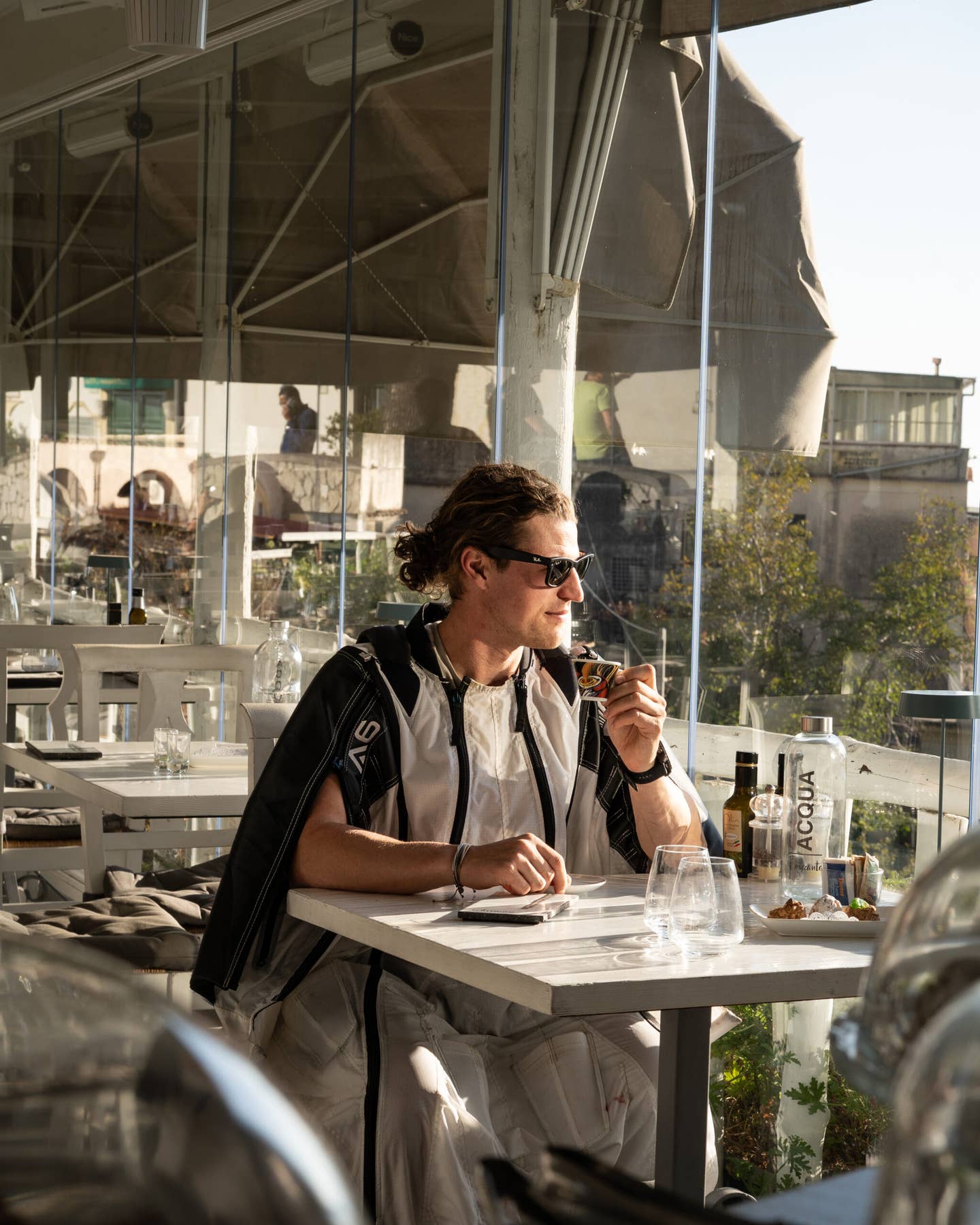
If someone watches this and feels inspired by wingsuit flying, what do you want them to know about the reality of the sport?
Flying is amazing. Inspiring people through wingsuit flying is even more amazing. Sometimes people say, “Nah, it’s too difficult…” and.. that’s true. But difficult things are beautiful.
In my opinion, anyone can start if they have enough patience.
As for tips: Be patient, becoming a good wingsuit pilot is a long-term goal.
As in any high-risk sport, mental maturity is crucial. Train that as well, not just your muscles. Getting to know your body and your mind can save your life more than once.
And… give yourself time. In my case, I’m really glad the skills came only when I was in my thirties. I don’t see myself doing these things with the mindset I had at twenty. But of course, that’s personal, I know there are many young and very talented people out there.
When you look back on your career so far, where does the Eye of Positano flight sit among your proudest achievements?
Definitely one of the top, maybe close to one or two projects that still aren’t published. It had everything that matters to me: good people even though the team was small, a meaningful story behind it, and it was pure BASE, with no helicopters or paragliders involved. Just nature. It also left a story that people in that small village are now sharing with one another.
What’s next for you? Are there lines or ideas already forming that push the level further?
If everything goes according to plan, I’d like 2026/2027 to be a years full of diverse projects. I have a few long-term ideas, more complex, maybe not as “eye-catching,” but athletically meaningful for me. Of course, there will also be some precision lines and maybe even pushing the limits a bit further, though always within my fairly large safety margin.
I’d also like to share more of the behind-the-scenes of these projects with the world, even though I know that in today’s fast-paced reality it doesn’t reach many people. Still, even for a few, it will be worth it!
If you had to describe this project in one word, what would it be, and why?
PERSPECTIVE
I think this word can describe a lot.
Every place seen from the perspective of a wingsuit flight looks completely different compared to the point of view of someone walking on the ground. It’s an amazing experience to hike in the places where we fly, or to fly over places we know from everyday life. It’s almost as if we had more than one life.. We observe the world from a perspective very few people ever get to see.
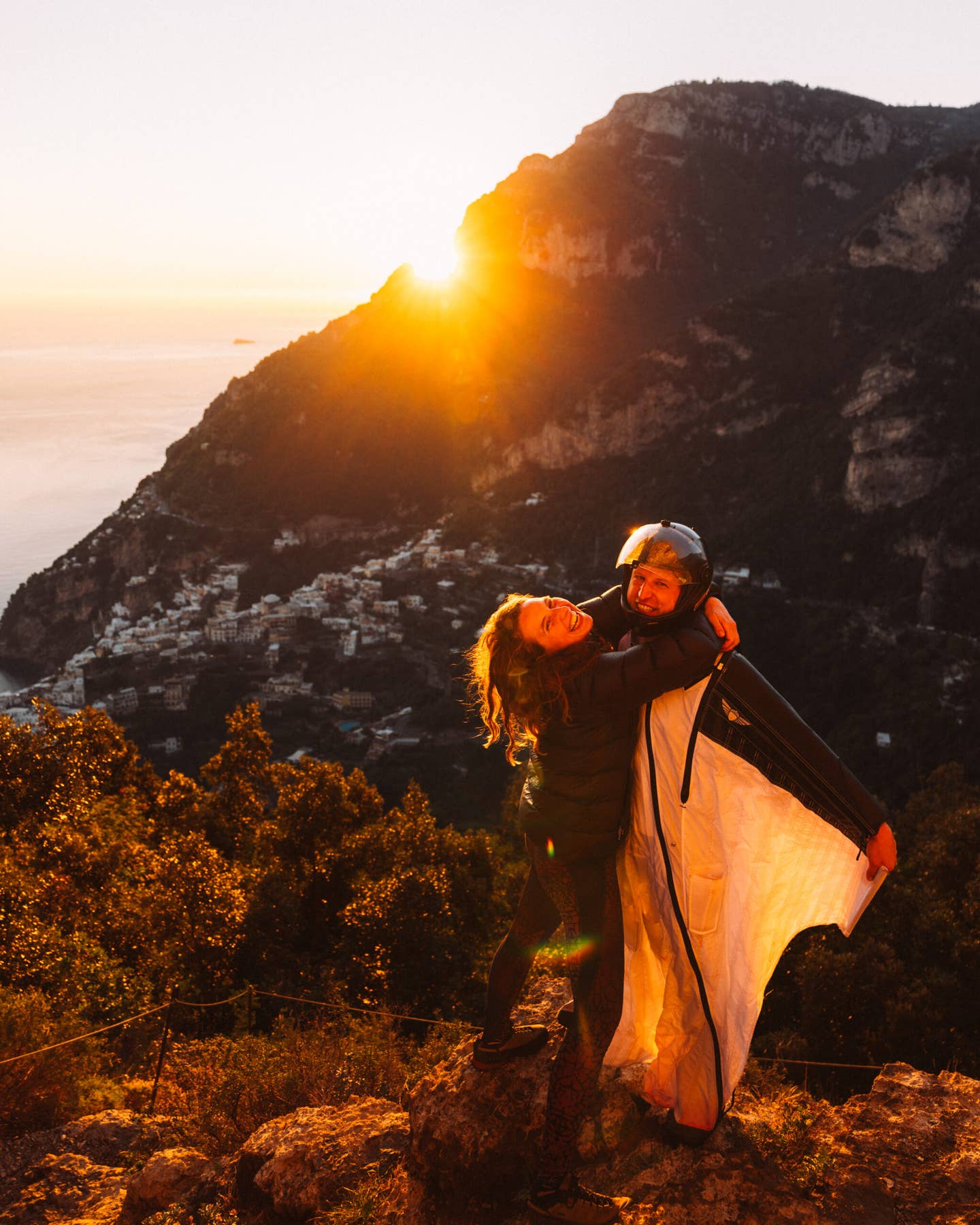
Wingsuit BASE is a discipline most people will only ever witness through screens, but conversations like this offer a look inside the mindset required to fly at the level Filip does. His approach to risk, focus, and preparation is as technical as his lines, yet his philosophy is surprisingly calm, grounded, and thoughtful.
Whether you’re an action-sports athlete pushing your own limits or someone who simply wanted to understand why humans chase flight, Filip’s words leave something to sit with. Precision, patience, creativity, and trust; the themes he returns to again and again, are lessons that live far beyond the mountains he flies.
For now, the Eye of Positano joins a long list of lines that only few could make look effortless. But like everything else he does, it’s simply another step in a much bigger story Filip is writing in the air.
Maybe throw him an Instagram follow and you'll see ;)